Tuesday, 23 September 2014

Tuesday, 8 July 2014
Music Videos - Initial Ideas
Initial Ideas - Shortlist
We have chosen that for our A2 media coursework we're going to make a music video. Here I am going to make a collection of songs that I would like to look at making a video for:
I like this song because it is really feminist, and as I am in a pair with Maddie Leckie, we would be able to promote the message of the song very well and use all of our friends from Torquay Girls Grammar School within the video.
Gecko (Overdrive) is a really good song and although I wouldn't follow the idea of the official video, I would use the lyrics as inspiration for the theme of the song.
Wednesday, 2 July 2014
Music Video Case Study
Music Video Case Study
Mcfly - Love is Easy
McFly's video of Love is Easy, released Oct 24th 2012 is a performance of the song, with a combination of a literal interpretation of the lyrics, and abstract sections e.g. recreations of their album covers.Although the camera pans around, it is filmed in one shot, with no cutting or editing. This is a very simple effect and allows the audience to focus more on the song than the video.
At the beginning of the music video, there is a literal interpretation of the lyrics, with Dougie holding clouds above Tom as he sings "Laughing the clouds away". He then kneels down next to some paper flowers as he sings "I hear what the flowers say", and waters them for the line "and drink every drop of rain."
There are also references to the history of the band, for example with a reference to their music videos for Obviously, 5 Colours In Her Hair and Room On The 3rd Floor. This is followed by a reference to their album covers, as they recreate them with stage props.
There are many other references to the history of the band, including Danny stood at a podium accepting the Brit award that they won; Dougie surrounded by leaves and wearing a leaf crown, a reference to him winning I'm A Celebrity Get Me Out Of Here!; and Harry ballroom dancing, a reference to him winning Strictly Come Dancing.
The setting of the music video is a stage, a reference to the fact that Tom went to Sylvia Young school in his teens.
The video ends with the band performing the song, each of them playing their instruments and singing, and the camera pans around to show a large group of fans watching them perform and holding banners in support, as they do in their concerts.
I really like how this music video flows, and focusses more on the band and their song than the video itself. I would like to incorporate this into our music video and possibly film it in one shot rather than have a lot of jump cuts etc.
 |
| Room on the 3rd Floor album cover recreated at 1.56 |
 |
| Wonderland album cover recreated at 2.02 |
 |
| Motion in the Ocean album cover recreated at 2.08 |
 |
| Radio:ACTIVE album cover recreated at 2.14 |
 |
| Above The Noise album cover recreated at 2.24 |
Tuesday, 1 July 2014
Further music video research
Music Video Research
On 24/06/14 in our lesson we discussed the purpose of music videos and created this list:
We then watched some music videos, from the 70s 80s and 90s and created this table:

The videos we watched can be seen here:
We then wrote out the conventions of each type of music video and found another example for each:
Narrative:
- clear story for audience to follow
- linear structure
- can include cross cutting to shots of performance
Abstract/Conceptual:
- multiple settings/locations
- uses title/lyrics to influence the video
- no easily detectable narrative
- imagery, visual effects, iconography, symbolism, focus
Promotional/Performance:
- artist performing song for the majority of the video
- long cuts/shots
- close ups
- focussed on the artist themselves and their image
- direct address to camera - connection with the viewer
Thursday, 26 June 2014
{Ongoing} Lesson Diary before summer
A diary of the music video research and work we do each lesson
27/06/14 - Listen to songs, make a video storyboard, then watch real video.
26/06/14 - Read lyrics, make a video storyboard, then watch real video.
24/06/14 - Watched 3 videos and wrote out the conventions of different video types - narrative, abstract, promotional.
Researching Music Videos
Researching our Medium
- music videos
A music video is a short film integrating a song and imagery, produced for promotional or artistic purposes. Nowadays music videos are used as a marketing divide to promote the sale of an artist's song, although the origins of music videos date back as early as the 1920s. Before the 1980s, music videos had various terms, such as "promotional film", "song clip", "illustrated song" and "filmed insert".
The "world's first music video" is unclear as they have changed dramatically overtime. The first 'music videos' originated from 'talkies' (films with sound) in the 1920s. From 1926, Warner Bros produced Vitaphone shorts, many of which included solo artists and bands. In the 1930s, musicians would perform their songs in live action segments of cartoons. Early Disney classic animated films, in particular Fantasia, were all based around music.
Above - Fantasia
'Soundies' were musical films that often included dancing, produced from 1940 - 47. Louis Jordan is said to have created the "ancestors" of music videos, making short films in the mid 40s for his songs and putting them together to make a feature film titled Lookout Sister.
Above - Louis Jordan early music videos.
Disc jokey-singer J.P. "The Big Bopper" Richardson was supposedly the first to coin the phrase "music video" in 1959, according to the Internet Accuracy Project.
Tony Bennett claimed to have created "the first music video" in his autobiography when he was filmed walking along the Serpentine in Hyde Park in 1956.
The first narrative music video is set in the United States and was produced in 1957, which starred Elvis Presley's song Jailhouse Rock.
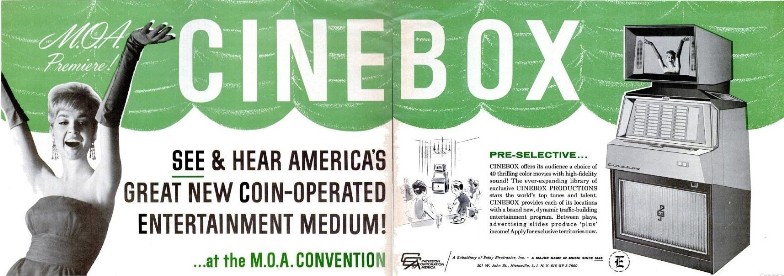
 The scopitone, a visual jukebox, was invented in France in the late 1950s and spread to other countries quickly, and similar machines such as the Color-Sonic in the USA and the Cinebox in Italy, were patented.

Modern music videos use a variety of techniques, blending different styles such as animation, live action, abstract film and music. They can range from narrative videos creating a story based on the song; an artist's emotional response to the song; send a political/societal message; be the artist performing the song; or be completely abstract from the song.
Here are some recent music videos.
The "world's first music video" is unclear as they have changed dramatically overtime. The first 'music videos' originated from 'talkies' (films with sound) in the 1920s. From 1926, Warner Bros produced Vitaphone shorts, many of which included solo artists and bands. In the 1930s, musicians would perform their songs in live action segments of cartoons. Early Disney classic animated films, in particular Fantasia, were all based around music.
Above - Fantasia
'Soundies' were musical films that often included dancing, produced from 1940 - 47. Louis Jordan is said to have created the "ancestors" of music videos, making short films in the mid 40s for his songs and putting them together to make a feature film titled Lookout Sister.
Above - Louis Jordan early music videos.
Disc jokey-singer J.P. "The Big Bopper" Richardson was supposedly the first to coin the phrase "music video" in 1959, according to the Internet Accuracy Project.
Tony Bennett claimed to have created "the first music video" in his autobiography when he was filmed walking along the Serpentine in Hyde Park in 1956.
The first narrative music video is set in the United States and was produced in 1957, which starred Elvis Presley's song Jailhouse Rock.
The first example of a promotional music video, with similarities to modern abstract videos, is reported to be "Dáme si do bytu" made in 1958, directed by Ladislav Rychman.
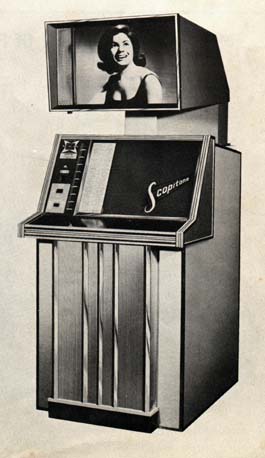 The scopitone, a visual jukebox, was invented in France in the late 1950s and spread to other countries quickly, and similar machines such as the Color-Sonic in the USA and the Cinebox in Italy, were patented.
Modern music videos use a variety of techniques, blending different styles such as animation, live action, abstract film and music. They can range from narrative videos creating a story based on the song; an artist's emotional response to the song; send a political/societal message; be the artist performing the song; or be completely abstract from the song.
Here are some recent music videos.
Subscribe to:
Posts (Atom)