Researching our Medium
- music videos
A music video is a short film integrating a song and imagery, produced for promotional or artistic purposes. Nowadays music videos are used as a marketing divide to promote the sale of an artist's song, although the origins of music videos date back as early as the 1920s. Before the 1980s, music videos had various terms, such as "promotional film", "song clip", "illustrated song" and "filmed insert".
The "world's first music video" is unclear as they have changed dramatically overtime. The first 'music videos' originated from 'talkies' (films with sound) in the 1920s. From 1926, Warner Bros produced Vitaphone shorts, many of which included solo artists and bands. In the 1930s, musicians would perform their songs in live action segments of cartoons. Early Disney classic animated films, in particular Fantasia, were all based around music.
Above - Fantasia
'Soundies' were musical films that often included dancing, produced from 1940 - 47. Louis Jordan is said to have created the "ancestors" of music videos, making short films in the mid 40s for his songs and putting them together to make a feature film titled Lookout Sister.
Above - Louis Jordan early music videos.
Disc jokey-singer J.P. "The Big Bopper" Richardson was supposedly the first to coin the phrase "music video" in 1959, according to the Internet Accuracy Project.
Tony Bennett claimed to have created "the first music video" in his autobiography when he was filmed walking along the Serpentine in Hyde Park in 1956.
The first narrative music video is set in the United States and was produced in 1957, which starred Elvis Presley's song Jailhouse Rock.
 The scopitone, a visual jukebox, was invented in France in the late 1950s and spread to other countries quickly, and similar machines such as the Color-Sonic in the USA and the Cinebox in Italy, were patented.

Modern music videos use a variety of techniques, blending different styles such as animation, live action, abstract film and music. They can range from narrative videos creating a story based on the song; an artist's emotional response to the song; send a political/societal message; be the artist performing the song; or be completely abstract from the song.
Here are some recent music videos.
The "world's first music video" is unclear as they have changed dramatically overtime. The first 'music videos' originated from 'talkies' (films with sound) in the 1920s. From 1926, Warner Bros produced Vitaphone shorts, many of which included solo artists and bands. In the 1930s, musicians would perform their songs in live action segments of cartoons. Early Disney classic animated films, in particular Fantasia, were all based around music.
Above - Fantasia
'Soundies' were musical films that often included dancing, produced from 1940 - 47. Louis Jordan is said to have created the "ancestors" of music videos, making short films in the mid 40s for his songs and putting them together to make a feature film titled Lookout Sister.
Above - Louis Jordan early music videos.
Disc jokey-singer J.P. "The Big Bopper" Richardson was supposedly the first to coin the phrase "music video" in 1959, according to the Internet Accuracy Project.
Tony Bennett claimed to have created "the first music video" in his autobiography when he was filmed walking along the Serpentine in Hyde Park in 1956.
The first narrative music video is set in the United States and was produced in 1957, which starred Elvis Presley's song Jailhouse Rock.
The first example of a promotional music video, with similarities to modern abstract videos, is reported to be "Dáme si do bytu" made in 1958, directed by Ladislav Rychman.
 The scopitone, a visual jukebox, was invented in France in the late 1950s and spread to other countries quickly, and similar machines such as the Color-Sonic in the USA and the Cinebox in Italy, were patented.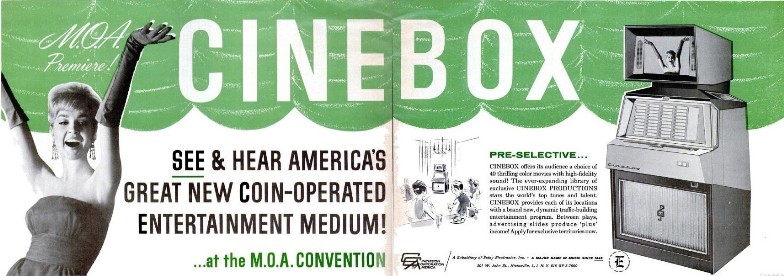
Modern music videos use a variety of techniques, blending different styles such as animation, live action, abstract film and music. They can range from narrative videos creating a story based on the song; an artist's emotional response to the song; send a political/societal message; be the artist performing the song; or be completely abstract from the song.
Here are some recent music videos.

A comprehensive journey through the history and development of the genre.
ReplyDelete